The Final Meeting of the Steering Committee for Phase III of EU Project Pravo-Justice Took Place
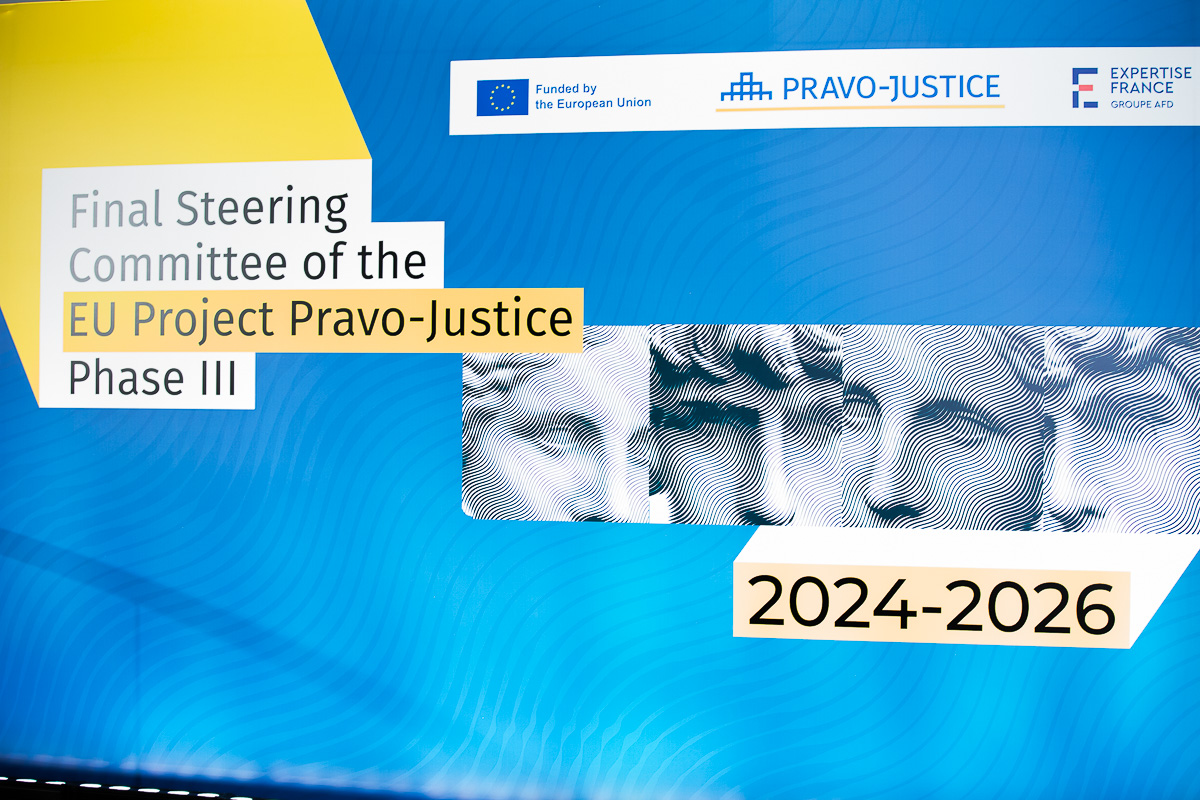
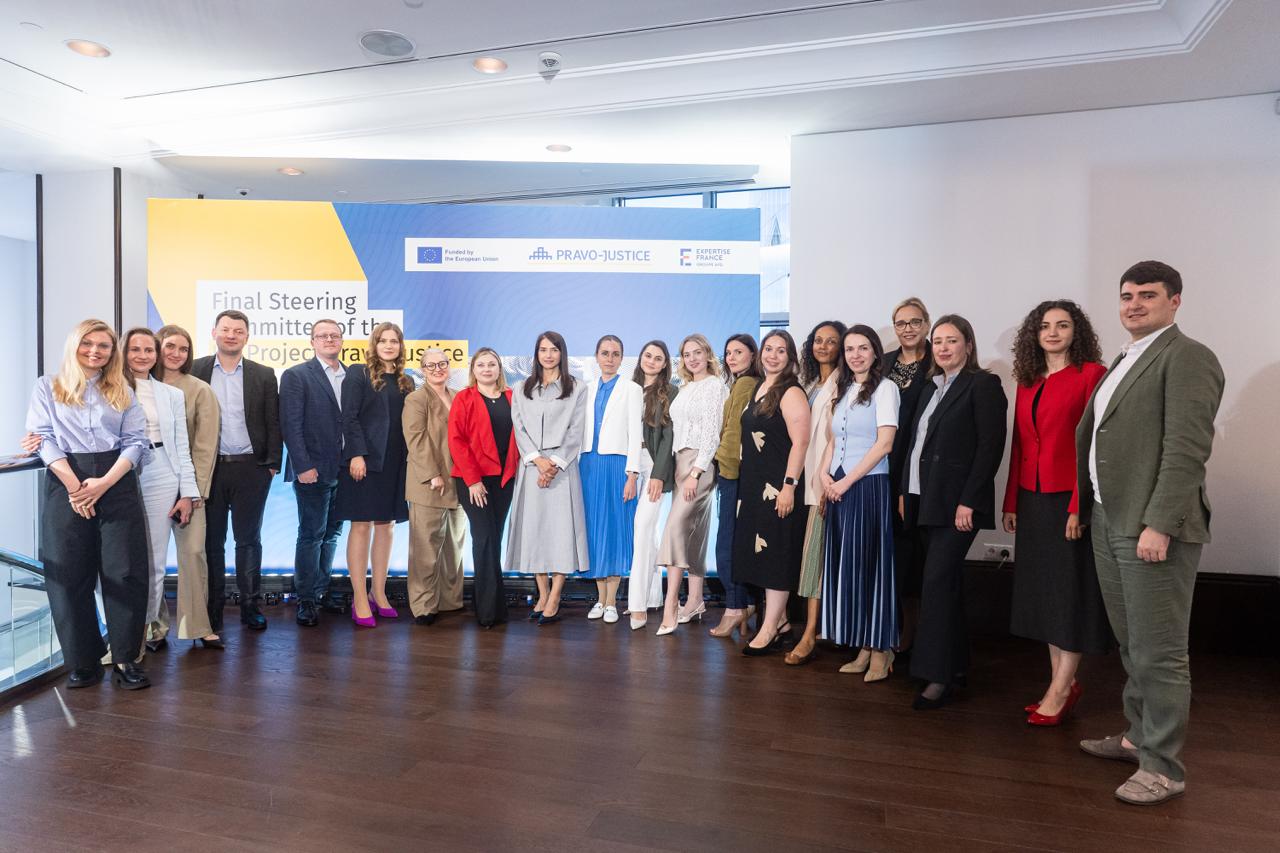
On 18 June, the final meeting of the Steering Committee of EU Project Pravo-Justice, implemented by Expertise France, took place in Kyiv. The event provided an important opportunity to take stock of the Project’s activities during the first half of 2026, as well as to discuss the key outcomes of the Project’s third phase, which ran from January 2024 and was implemented against the backdrop of a full-scale war. Despite this, Ukraine continued its progress towards the European Union, completed the screening of the acquis under Chapters 23 ‘Judiciary and Fundamental Rights’ and 24 ‘Justice, Freedom and Security’, approved the Rule of Law Roadmap, and launched Cluster 1 ‘Fundamentals’ on 15 June 2026.
The Project provided expert and organisational support at all stages of this process, in particular during mock sessions held in preparation for bilateral screening meetings and the development of compliance tables between Ukrainian legislation and EU law. A key outcome was the establishment of mechanisms to coordinate the implementation of the Rule of Law Roadmap, bringing together over 40 international donors and programmes, as well as more than 75 civil society organisations involved in reforms in this area.
The Project paid particular attention to strengthening the institutional capacity of the judiciary. With the support of Pravo-Justice, the High Qualification Commission of Judges of Ukraine resumed its work and received the tools and expert assistance needed to conduct transparent competitions and qualification evaluation of judges. Besides, the Service of Disciplinary Inspectors of the High Council of Justice was established: around 400 candidates were assessed, and 23 disciplinary inspectors were selected, along with the Head and Deputy Head of the Service.
The Project also supported the development of the victim and witness support system, in particular by strengthening the Coordination Centre and expanding the regional network of relevant units. A separate focus was placed on supporting the professional self-regulation of private legal professions.
An important component of the Project’s activities was the introduction of new practical solutions for the justice system. The Project supported the modernisation of the Supreme Court’s Database of Legal Positions through the implementation of generative artificial intelligence tools, an updated interface, and integration with UJICS. The development of EXILA – Ukraine’s first IT system for automating the work of the Office of the Prosecutor General in the field of extradition and international legal assistance – was also completed. Other results included the conduct of the first nationwide crime survey in Ukraine and the development of a standardised form for assessing the risk of reoffending, amongst others.
A particular focus of Phase III was on the resilience of the justice system and its human dimension. With the Project’s support, a comprehensive model of psychological support for prosecutors dealing with international crimes was developed and implemented for the first time. Ukraine’s first nationwide study on the psychological well-being of court staff in wartime conditions was carried out.
The Project facilitated the integration of state veterans’ policy into the probation system: a Roadmap and an action plan were developed to adapt tools and approaches for working with veterans who are in conflict with the law. At the same time, the documentary film ‘In Your Name: Justice in Wartime’ helped draw the attention of international and Ukrainian audiences to the day-to-day operation of the judicial system amidst full-scale aggression.
A significant part of the work involved supporting civil society initiatives. Thus, between 2024 and 2026, approximately 870 000 euros were allocated to grant schemes for CSOs.
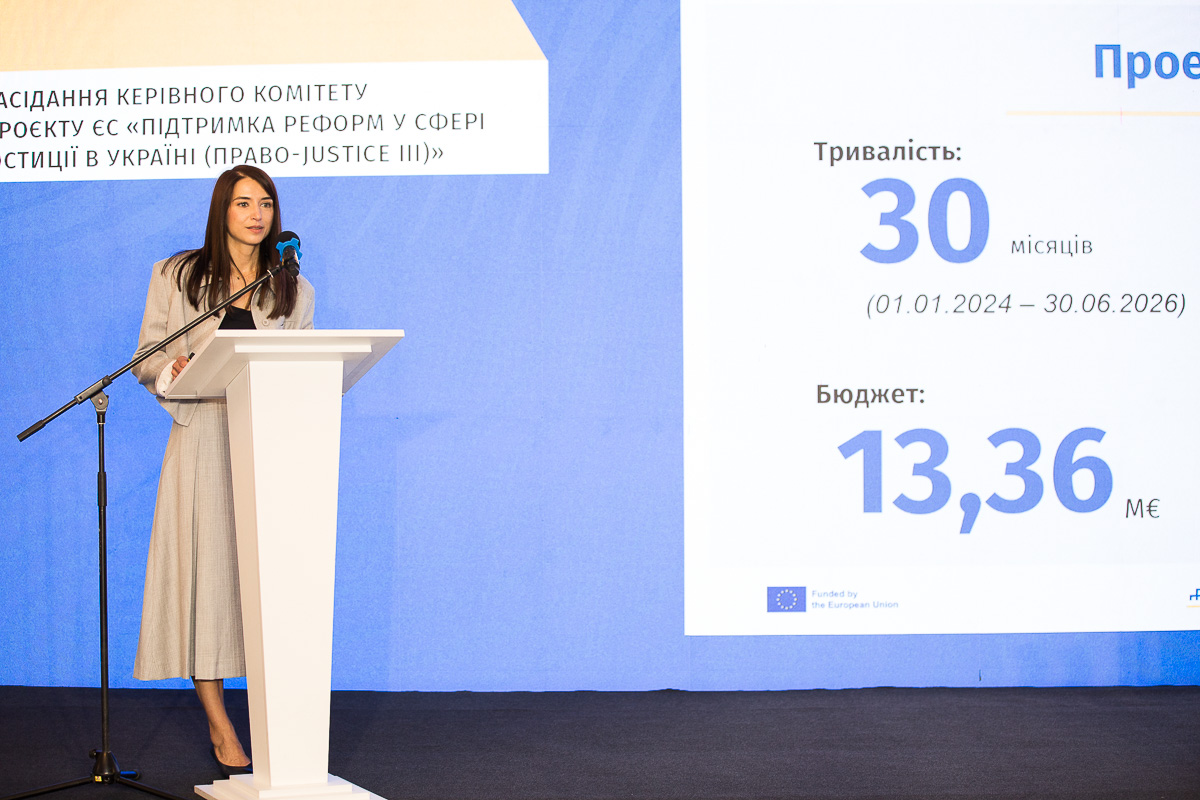
“The third phase of EU Project Pravo-Justice has shown that even in the midst of a full-scale war, reforms in the justice sector have not come to a standstill, and European integration has become part of the day-to-day work of Ukrainian institutions. All the results presented are a joint effort – they were made possible thanks to government bodies, civil society, experts and international partners. Our task is not simply to support change, but to strengthen the capacity of Ukrainian institutions so that the justice system is independent, effective and capable of responding to the challenges of our time on its own,” said Oksana Tsymbrivska, Team Leader of EU Project Pravo-Justice.
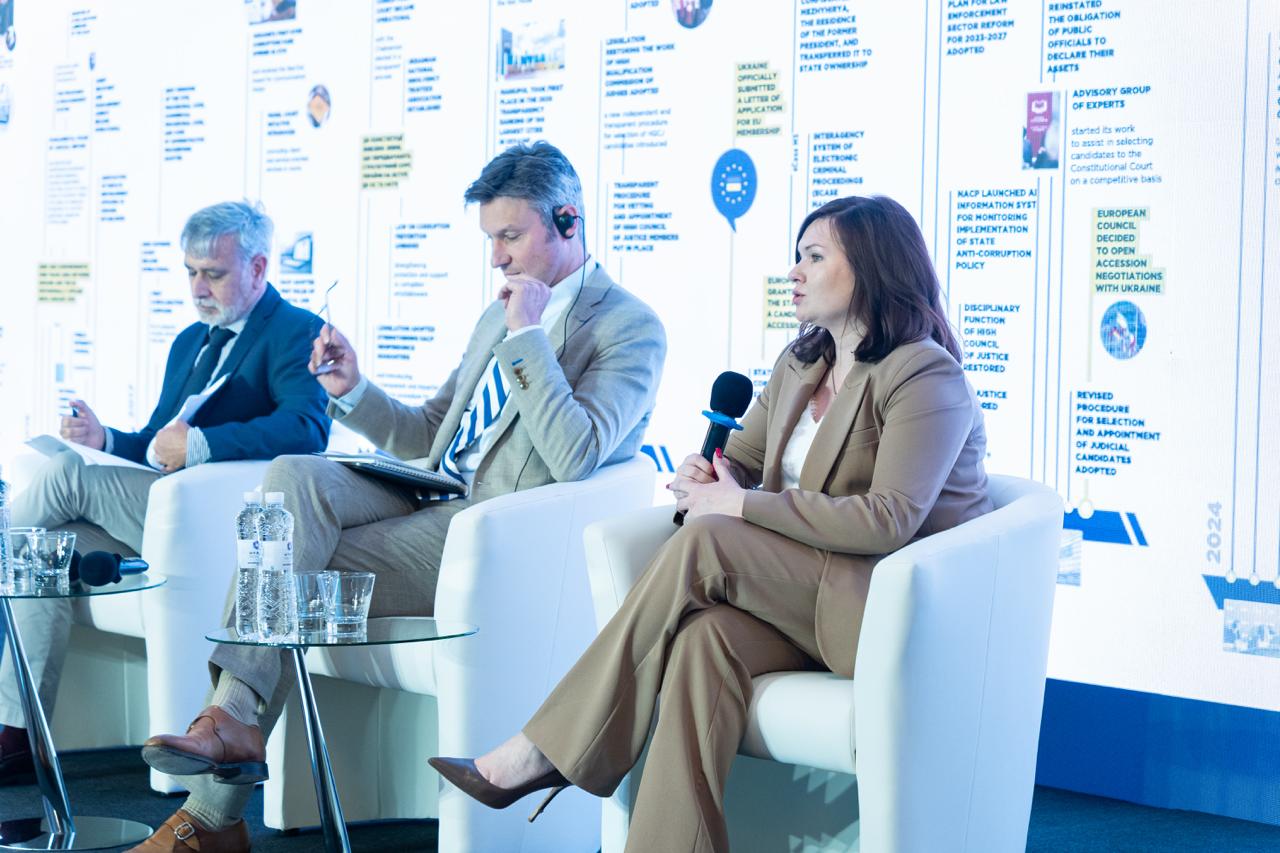
“I would like to express my sincere gratitude to EU Project Pravo-Justice and, personally, to its Team Leader, Oksana Tsymbrivska, for being with us all these years. It has been hard and painstaking work, aimed at achieving a common goal. Together with the Project, we worked not only on the preparation and implementation of the Roadmap, but also on reforms in areas falling within scope of responsibility of the Ministry of Justice: penitentiary reform, bankruptcy and insolvency, the rule of law, human rights, and many other areas. “We have always known that when we turn to Pravo-Justice, we will receive prompt, high-quality and professional support. This is not just another project – it is a team of professionals and patriots who are genuinely committed to Ukraine’s European future,” said Liudmyla Suhak, Acting Minister of Justice of Ukraine.
"Reforming institutions is a broad and demanding undertaking. I would like to congratulate EU Project Pravo-Justice for addressing not only the most accessible challenges, but also more complex areas of the judiciary and justice system that require sustained effort and commitment. Ukraine’s European path has been, and will remain, a constant reference point in this process - as it was during Phase III and as it will be during Phase IV. It is essential that we continue to speak the same language and work towards shared goals. I would also like to thank Expertise France, the French government’s technical assistance agency and the Project’s implementing partner, for the trust it has helped build among Ukrainian and international stakeholders," said Sébastien Surun, Deputy Ambassador of France.
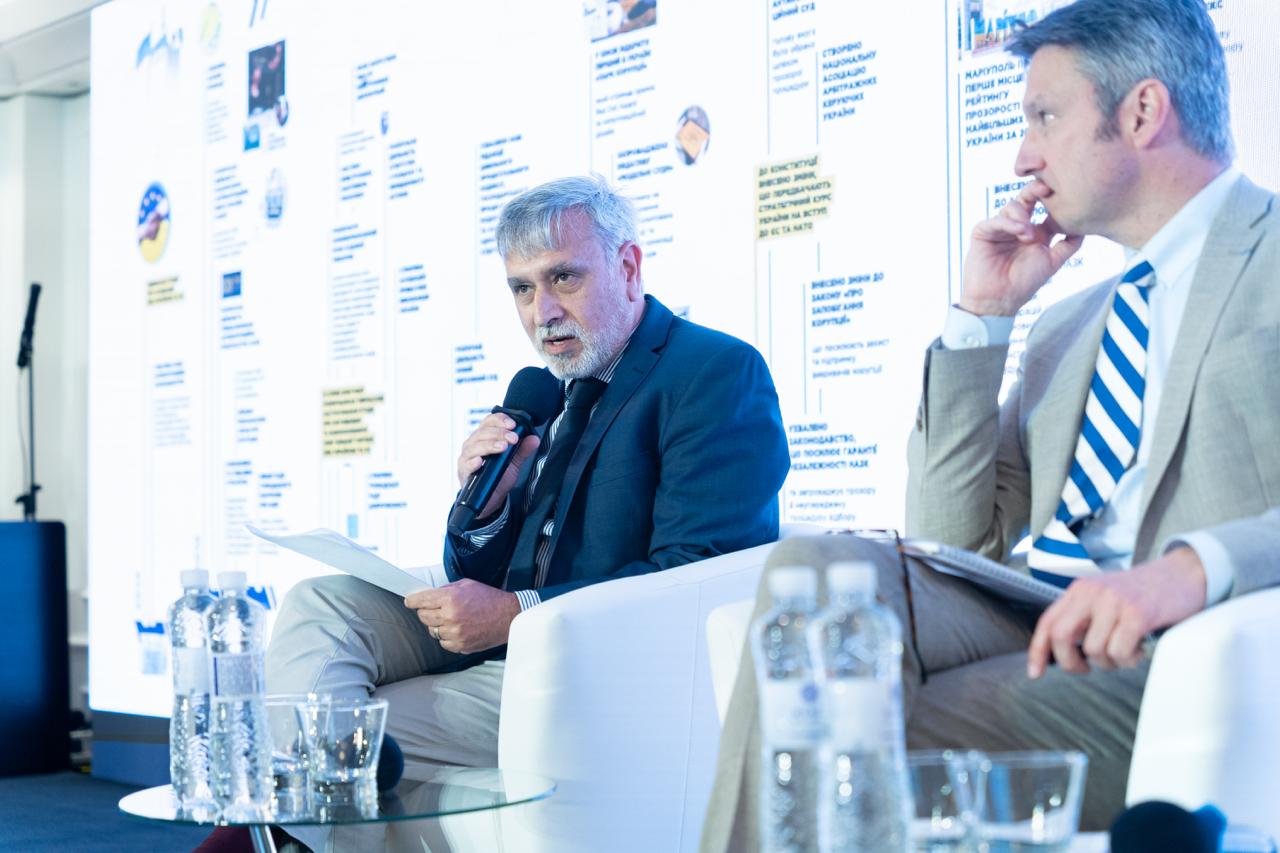
Asier Santillán, Head of the European Integration, Governance and Rule of Law, Civil Society Section at the EU Delegation to Ukraine, thanked the Project Team for their persistent work over many years in challenging circumstances.
“You have all worked in difficult circumstances and under considerable pressure, whilst consistently maintaining high standards of work and the quality of your results. The European Union’s support for justice reforms in Ukraine has a long history. For over ten years now, EU Project Pravo-Justice and its predecessors have been supporting Ukrainian institutions, legal professionals and civil society in building a justice system that is more independent, accountable, professional and responsive to citizens’ needs. Phase three of the Project is now drawing to a close, and we can be proud of this consistency and continuity of work. At the same time, its results will form the basis for the next phase, preparations for the launch of which are underway now,” he said.
Also taking part in the meeting were Members of Parliament Denys Maslov, Oleksii Movchan, and Mykola Stefanchuk; Deputy Chair of the High Council of Justice Oksana Kvasha; Chair of the High Qualification Commission of Judges Andrii Pasichnyk; Deputy Prosecutor General of Ukraine Andrii Leshchehko; Chair of the Qualification and Disciplinary Commission for Judges Maksym Radzivon; Deputy Head of the State Judicial Administration Leonid Sapelnikov; Director of the Coordination Centre for Legal Aid Provision Oleksandr Baranov; Acting Director of the Probation Centre Mykola Rudyk; and other representatives of the judiciary, justice sector, and self-governing bodies of private legal professionals.
It should be noted that Phase IIII of EU Project Pravo-Justice has been running for 30 months – from 1 January 2024 to 30 June 2026 – with a total budget of €13.36 million. The Project covers four key areas: prosecutorial reform and prosecution of international crimes; judicial reform; enforcement of court decisions and protection of property rights; and support for European integration in the justice sector.
Download the key results of EU Project Pravo-Justice for the period of January–June 2026