EU Project Pravo-Justice Has Launched a Course on EU Law in the Field of Criminal Justice
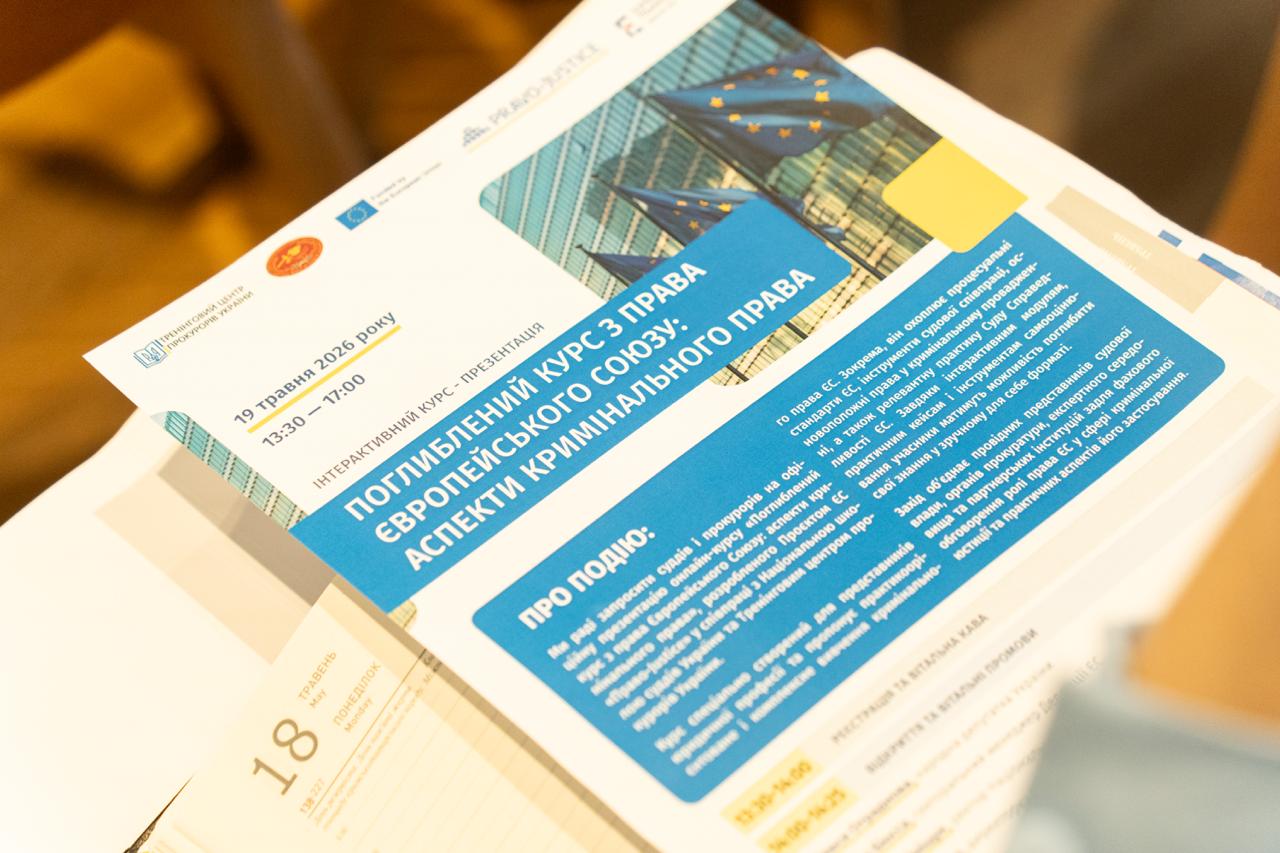
On 19 May, EU Project Pravo-Justice, in collaboration with the National School of Judges of Ukraine and the Prosecutorial Training Center of Ukraine, presented an online training course entitled “EU Law Advanced: Criminal Aspects”.
The course has been designed specifically for legal professionals and combines a practical approach with a comprehensive study of EU criminal law. In particular, it covers EU procedural standards, instruments of judicial cooperation, fundamental rights in criminal proceedings, and the case law of the Court of Justice of the European Union.
The event was moderated by Virgilijus Valančius, Senior International Expert at EU Project Pravo-Justice and Judge at the General Court of the EU from 2016 to 2023, alongside Anna Stakhanova, Key Expert on Accountability for International Crimes at EU Project Pravo-Justice.
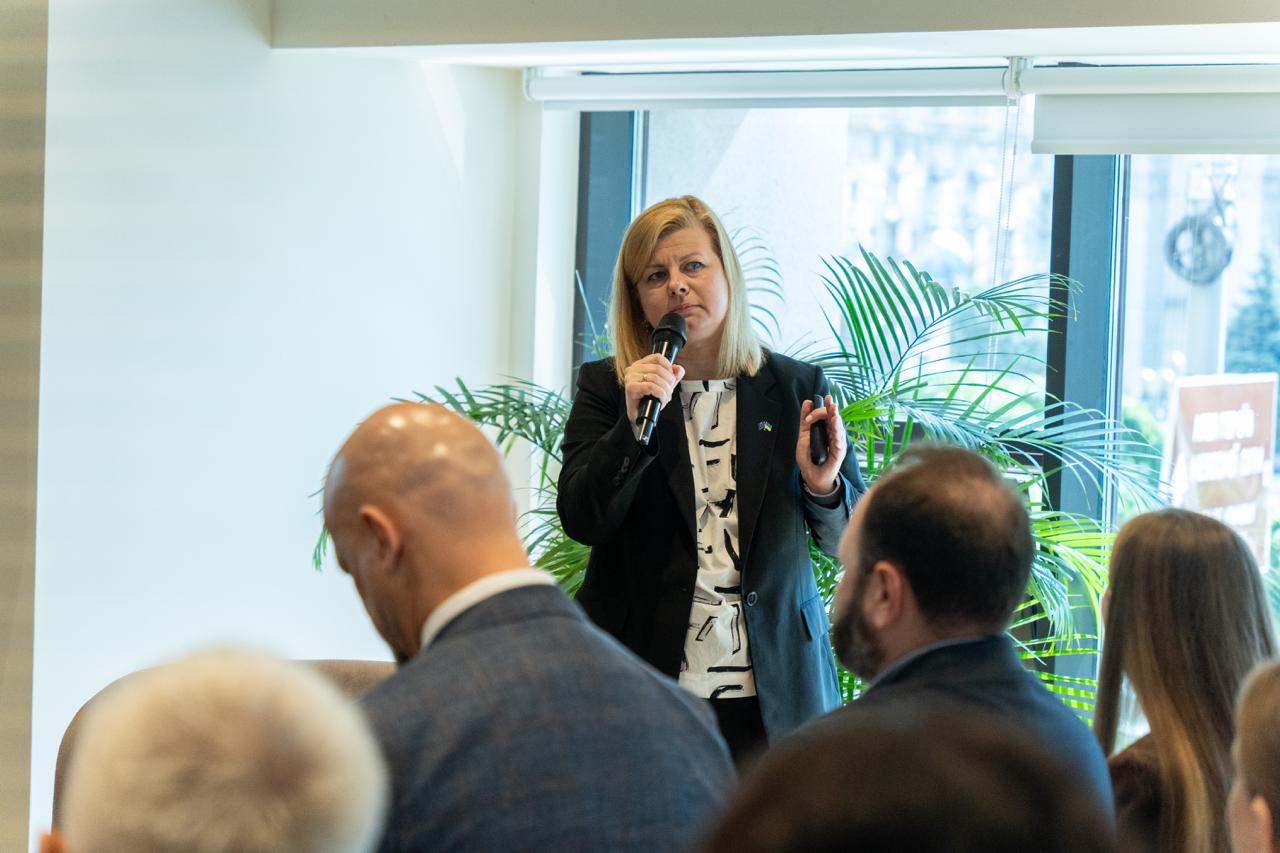
Presenting the course, Tetiana Anakina, Associate Professor at the Yaroslav Mudryi National Law University and National Expert for EU Project Pravo-Justice, emphasised that EU law in the field of criminal justice is not just about new legal instruments, but about a completely different logic of interaction between states and legal systems.
“It is a great honour for me to work on a course which, I hope, will be useful even today – despite the fact that Ukraine is currently only a candidate country for EU membership. At the same time, it is important to be as well-prepared as possible for the moment of accession,” emphasised Tetiana Anakina.
During the course presentation, representatives of the judiciary, the prosecution service, and the expert community together with international partners discussed the significance of EU law for Ukrainian law enforcement practice, as well as the role of professional education in Ukraine’s European integration process.
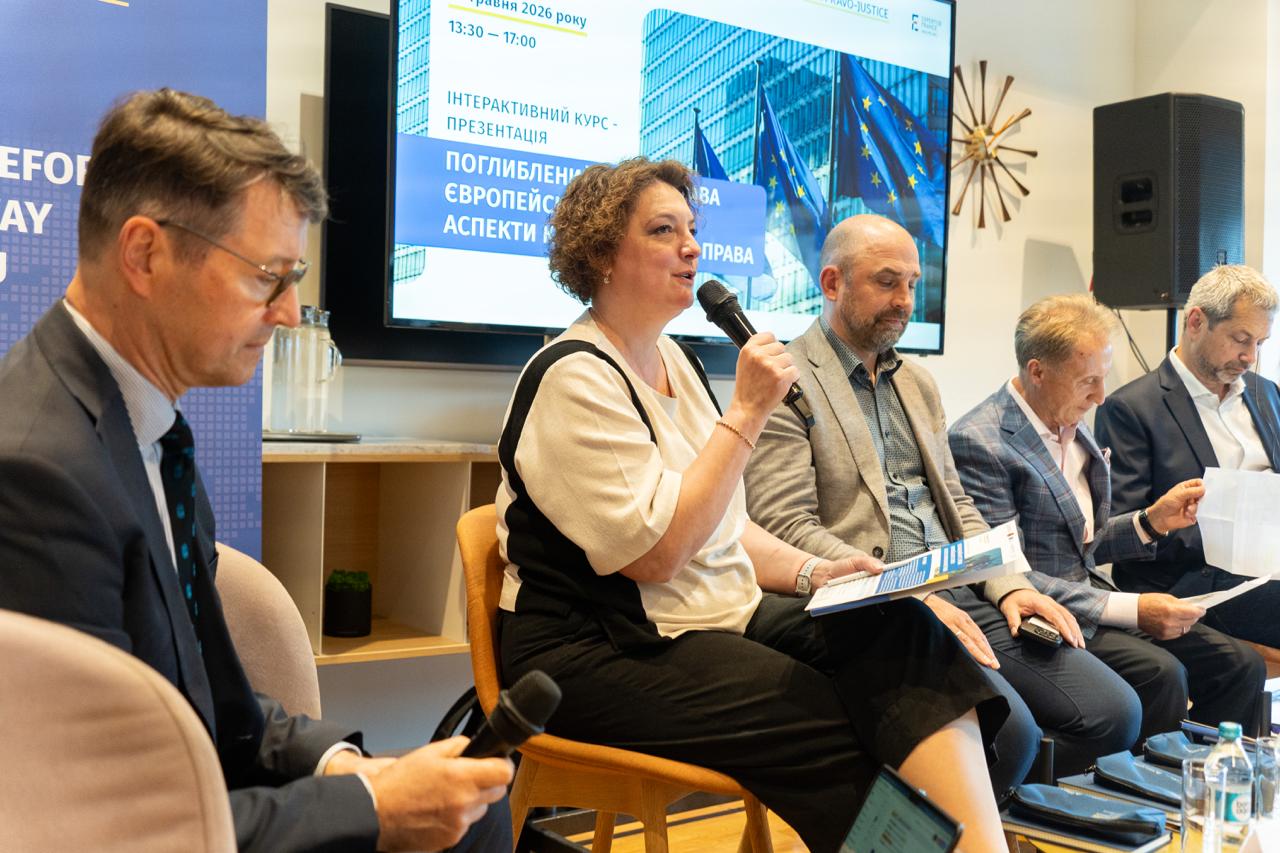
Olesia Otradnova, Ukrainian MP, emphasised that the integration of EU law into the professional training of judges and prosecutors must take place gradually, in a practical manner, and with due regard for the real challenges faced by justice system professionals on a daily basis.
“One day, the entire body of European legislation will become part of our legal system, and judges and prosecutors will work with it on a daily basis. At the same time, it was important to make this process gradual and practical – that is why we started with a basic course, which Ukrainian judges and prosecutors have started undertaking. Today, this idea has been continued in a specialised course on aspects of EU criminal law,” noted Olesia Otradnova.
Speaking about the pace of training Ukrainian judges to work with European Union law, Mykola Onishchuk, Rector of the National School of Judges of Ukraine, emphasised that Ukraine has significantly less time to adapt to European legal standards than other EU candidate countries. At the same time, he highlighted the high level of interest among Ukrainian judges in studying EU law and the professional community’s readiness to actively embrace European legal approaches.
Particular attention was also paid to the practical features of the course – interactive modules, case studies, and self-assessment tools – which allow for flexible learning and the deepening of knowledge in line with the needs of practising lawyers.
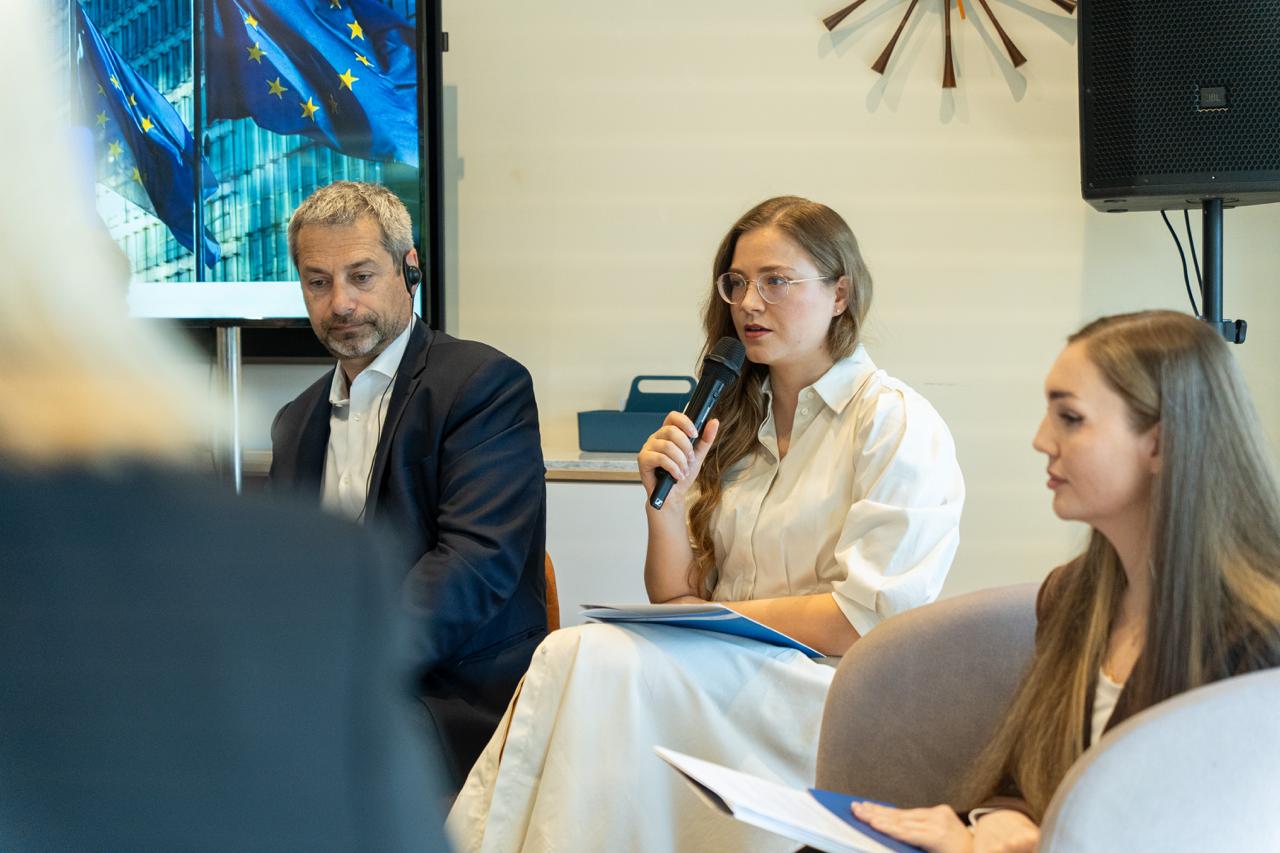
For her part, Olha Sribniak, Deputy Team Leader of EU Project Pravo-Justice, emphasised that Ukraine’s readiness for EU membership is not merely a matter of adapting legislation, but also of the legal community’s ability to practically apply European legal instruments.
“We often talk about Ukraine’s readiness for EU membership, but this is not just about implementing the acquis into national legislation. It is also about the ability of judges, prosecutors, lawyers and other legal professionals to apply EU law and European standards in their daily professional practice. That is precisely why this course is so important. Not only it deepens knowledge but also helps practitioners understand the logic of the European legal order, procedural standards and the mechanisms of interaction between EU Member States,” noted Olha Sribniak.
She also concluded that the course was a continuation of previous educational initiatives by EU Project Pravo-Justice in the field of EU law and a further step towards establishing a sustainable system of professional training for legal practitioners in the context of Ukraine’s European integration.