Cross-border Enforcement of Court Decisions: International Conference Held in the Framework of a Grant by EU Project Pravo-Justice
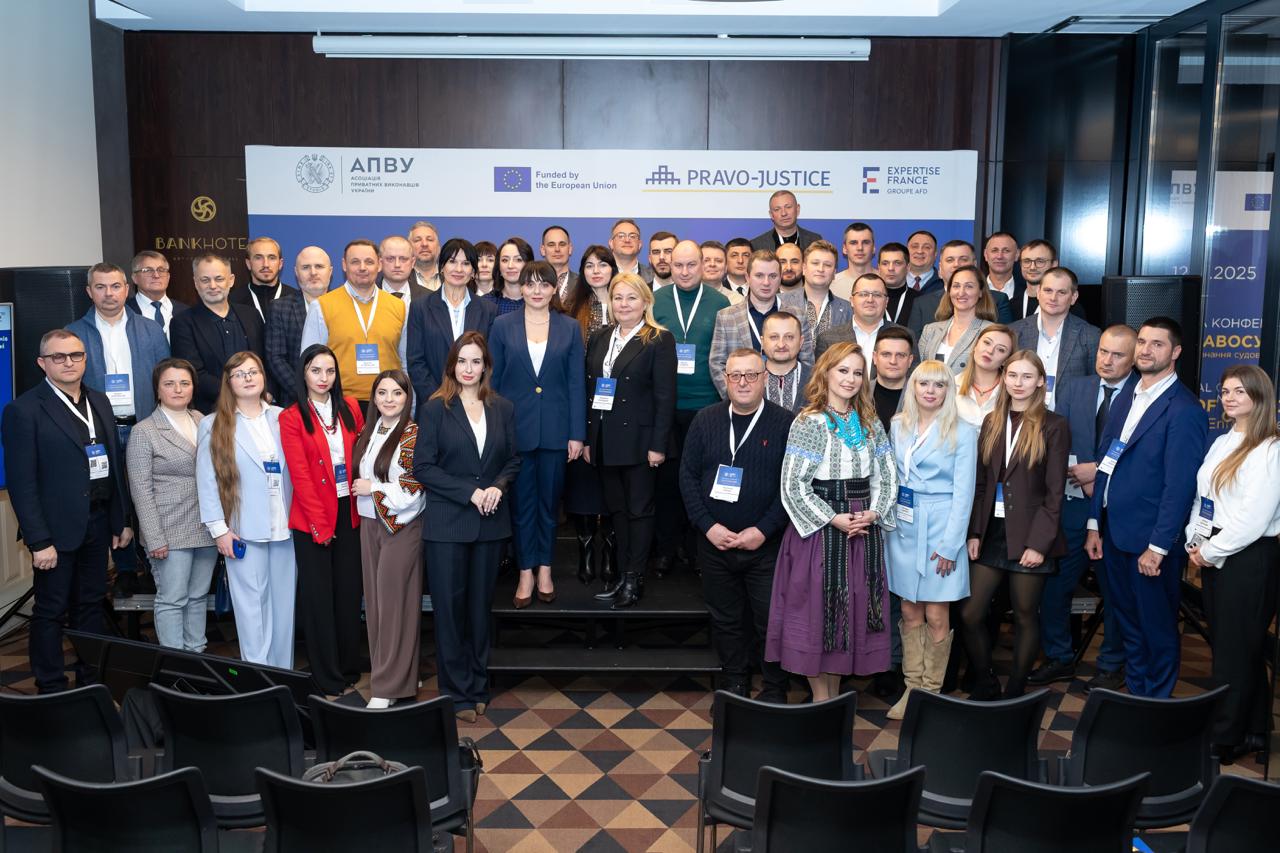
On 12 December, an international conference entitled ‘Bridges of Justice: Cross-Border Enforcement of Court Decisions’ took place. The event was organised by the Association of Private Enforcement Officers of Ukraine within the framework of a grant provided by EU Project Pravo-Justice, implemented by Expertise France, to contribute to the professional development of private enforcement officers. Representatives of the Ministry of Justice of Ukraine, members of parliament, private enforcement officers from Ukraine and European countries, lawyers and academics, and experts from EU Project Pravo-Justice joined the discussion.

“Cross-border enforcement of court decisions is crucial for ensuring effective justice not only in Ukraine but also beyond its borders,” said Oksana Rusetska, Chair of the Association of Private Enforcement Officers of Ukraine. “Such conferences provide an opportunity to bring together Ukrainian and European experts, exchange practical experience and develop common approaches.”

Oksana Tsymbrivska, Team Leader of EU Project Pravo-Justice, emphasised that cross-border enforcement of court decisions is an integral part of ensuring the rule of law. She noted that proper justice is only possible if court decisions are properly enforced, and the state’s capacity to guarantee this process is one of the key criteria used by the European Commission to assess Ukraine’s progress in the area of the rule of law. This is reflected in the Rule of Law Roadmap and the Ukraine Facility Plan.
The Team Leader of EU Project Pravo-Justice also noted that the modern legal environment is becoming increasingly cross-border in nature. That is why it is important for Ukraine not only to align its legislation with the EU acquis but also to demonstrate the institutional capacity of its enforcement system to work effectively both nationally and internationally.
“This involves further process digitalisation, streamlined exchange of information between jurisdictions, access to key registries, development of electronic tools, professional training of staff and consistent application of enforcement procedures. Both public and private enforcement officers have a key role to play in this process,” noted Oksana Tsymbrivska.
The conference featured three panels on practical, professional and legislative aspects of cross-border enforcement of court decisions. In the first panel, participants discussed international experience and Ukrainian practice of enforcing decisions, as well as new challenges related to recovery of digital assets.
Iryna Zharonkina, Enforcement and Protection of Property Rights Component Lead at EU Project Pravo-Justice, spoke at the event. She focused on the recognition and enforcement of Ukrainian court decisions in EU Member States.
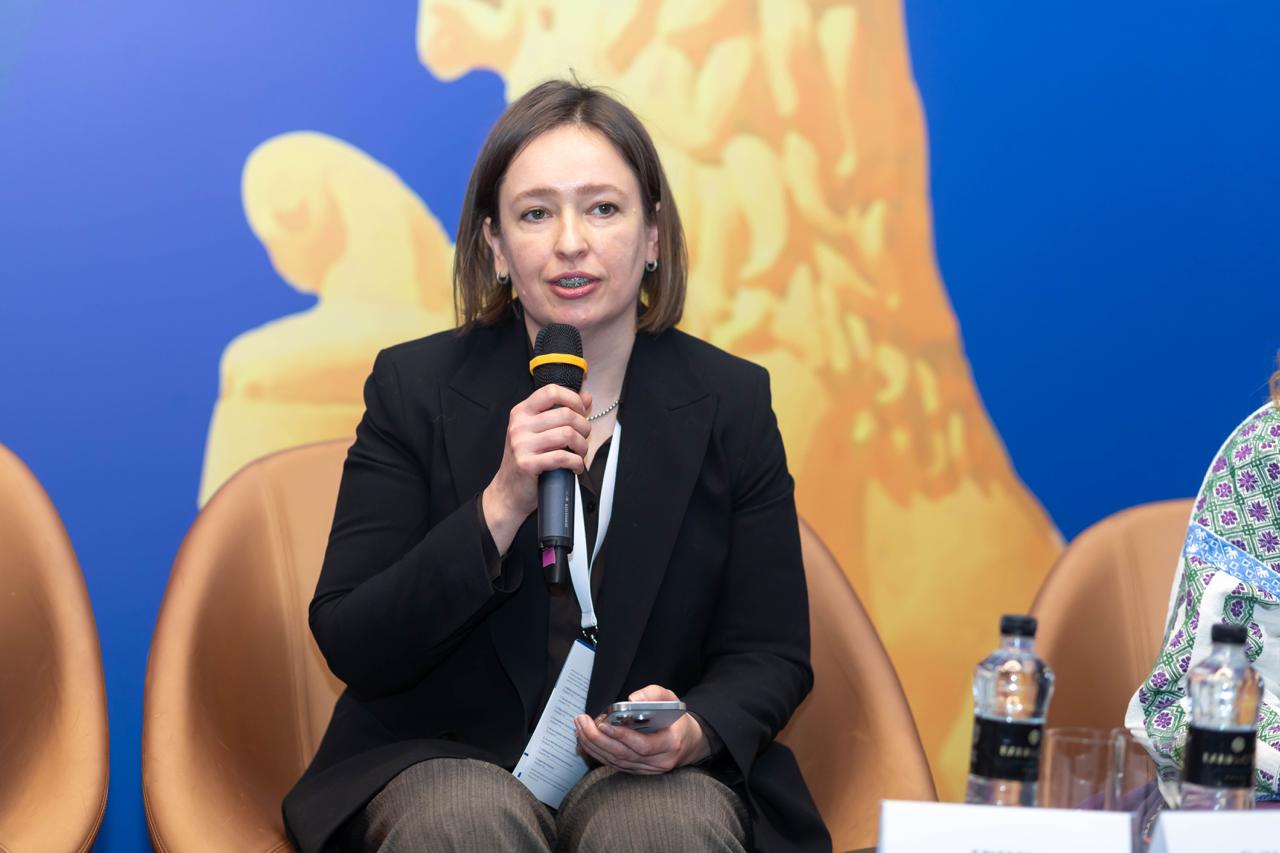
Iryna Zharonkina said that the key legal instrument in this area is the 2019 Hague Convention on the Recognition and Enforcement of Foreign Court Judgments, which entered into force for Ukraine in September 2023. The document facilitates and accelerates the procedure for the recognition and enforcement of judgments in the territories of EU member states for non-EU countries. The Convention applies to the recognition and enforcement of judgments in civil or commercial matters. The role of Ukraine’s mutual legal assistance agreements with a number of EU countries in ensuring the effective enforcement of judgments was also discussed.
“Today, Ukraine has a number of legal mechanisms for the recognition and enforcement of Ukrainian court decisions in EU member states. The main instrument is the 2019 Hague Convention. Procedures may also be carried out under mutual legal assistance agreements or in accordance with national legislation if the case does not fall under the Convention and there is no agreement with the country. At the same time, it is important to continue adapting national legislation to European standards and to build up experience in applying the Convention. This will not only increase the effectiveness of the enforcement of Ukrainian court decisions abroad, but will also enable an objective assessment of its results,” noted Iryna Zharonkina.
The second panel of the conference covered professional cooperation between enforcement officers, lawyers, notaries, and academics, building partnerships between practitioners from different countries, and improving the cross-border enforcement of judgments. The participants also discussed the role of mediation as a modern tool for peaceful dispute resolution.
The third panel focused on amending national legislation and developing a system for enforcing judgments in the context of European integration, particularly to guarantee property rights and strengthen investor trust in the Ukrainian legal system.
Overall, the conference was an important step in strengthening professional dialogue between Ukrainian and European experts and contributed to shaping a common vision for the further development of the system for enforcing judgments in Ukraine in line with European standards.